Chefs & Michel BRAS Kitchenware
Kanji Kobayashi, Villa Aida
Chef Kanji Kobayashi prepares a Hakuho peach salad with garden-harvested peppers, salt, pressed pepper juice, lemon olive oil, fresh parsnip seeds, dried peppers, tomato, paprika and dried paprika, lavender, fennel seeds, and green mandarin peel. He notes how naturally his knife handles vegetable prep, and highlights Le Moulin by Michel BRAS for releasing aroma right before use and adjusting grind coarseness to expand flavor and creative range.
Sota Atsumi, Restaurant MAISON
Chef Sota Atsumi of Restaurant MAISON shares how he came across Le Moulin by Michel BRAS after searching for a reliable mill, and how he uses it across his dishes—grating hazelnut and week-dried "black sudachi" over roasted guinea fowl (served with à la minute egg tartare, sea purslane, shallot-and-apple-vinegar sauce, and fig-leaf-wrapped yellow courgette topped with dried Fourme de Valcivière), grinding juniper-like pepper finely and evenly over two-month aged Galician beef tartare with oyster, lovage oil, and fried capers, and presenting a starter of smoked turbot roe tarama with lovage leaf oil, Barigoule artichokes, cucumber, and cucumber blossoms.
Julien Royer, ODETTE
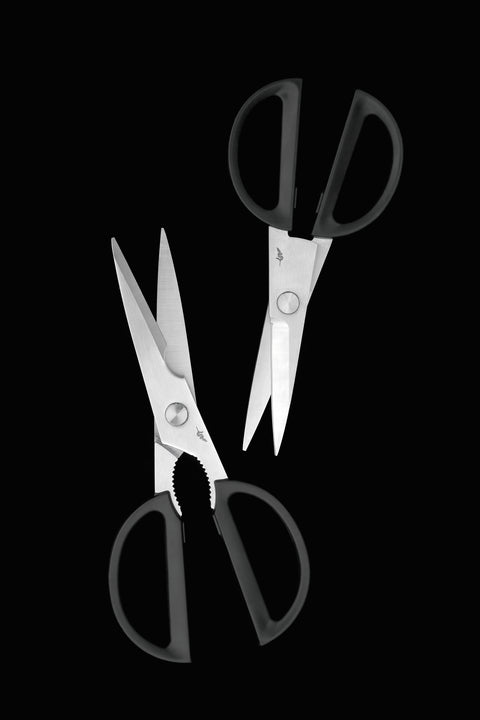
Chef Julien Royer of Odette emphasizes how having the right tools improves precision and cooking performance, sharing that he waited to open the box until filming to experience the surprise firsthand. He praises the range of KAI Michel BRAS scissors, knives, and mandoline for their world-class steel and material quality, durability, and smooth handling—highlighting the mandoline for being intuitive, easy to clip and use, and resistant to breaking or blade deterioration compared to mandolines that wear out quickly, the scissors for their comfortable grip (prise en main), sharpness, and solidity, and the knives for their cutting edge and ease of use, which he already knew from owning one previously.
Teruki Murashima, Heritage by Kei Kobayashi
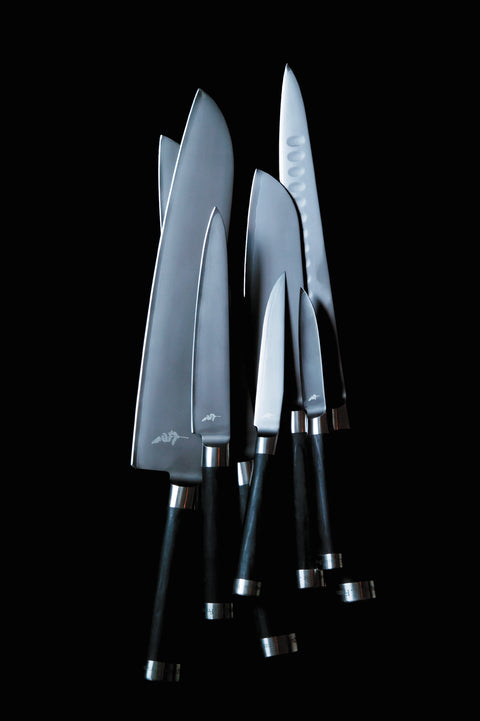
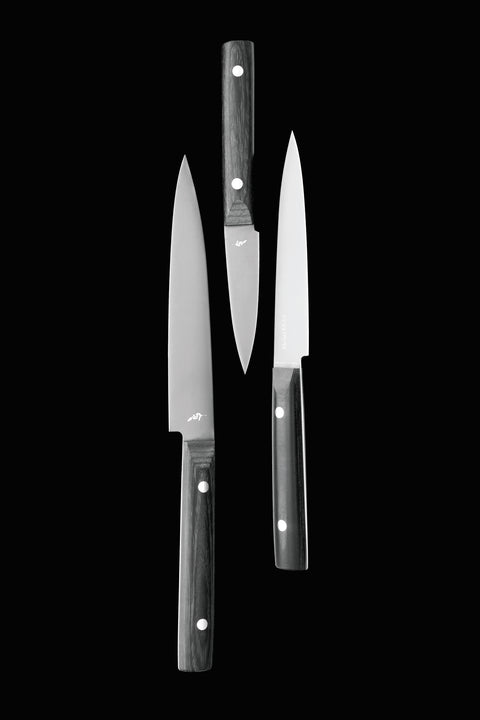
Chef Teruki Murashima shares his path from wanting to work at Michel BRAS and seeing a full set at Ésquisse to trying the tools—highlighting the No. 3 knife's thinness, sharpness, and balance, the bread knife's angled teeth for pushing or pulling on pie crusts and bread, and the versatile No. 8 boning knife for boning, filleting, and delicate work. He also notes that the knives sharpen smoothly on a whetstone while holding their edge, and praises the scissors and slicer—specifically how cleanly the slicer cuts truffles without sticking and the high quality of the overall tool finish.
Alexis Moko, Restaurant MOKO
Chef Alexis Moko on Essential Kitchen Tools: Michel BRAS Quotidien Knife, Mandoline, and Moulin
In this behind-the-scenes look, Chef Alexis Moko highlights the precision tools that power his kitchen, starting with the exceptionally versatile Quotidien knife from the Michel BRAS kitchenware brand. Featuring a blade that is remarkably sharp, thin, sturdy yet flexible, and paired with a comfortable handle, the knife handles everything from fish and meat to delicate vegetables effortlessly.
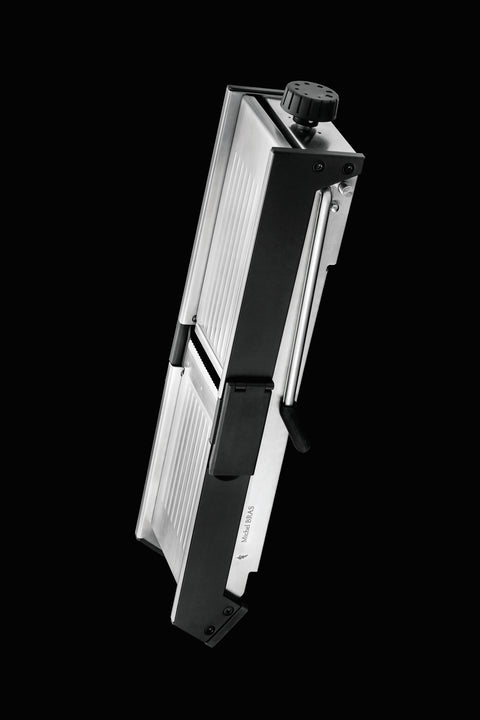
Moko also showcases two other game-changing kitchen implements: a cleverly designed freestanding mandoline with a built-in rear measurement knob for safe, ultra-precise, and consistent vegetable slicing, and the Moulin, which performs brilliantly in sustainable culinary practices. By utilizing every part of the animal—such as grating finely dehydrated deer heart over the finished dish—the Moulin adds the ultimate finishing touch to his creations.
Toshiharu Sunayama, Sen
Chef Sunayama of Sen Tenkawa shares that having spent time in France and pursued French cuisine, Michel BRAS has long been an admired chef whose philosophy and spirit come through in his tools. He notes that the larger bread/utility knife (No. 9) may feel slightly short for a big loaf compared to a long bread knife, yet its size makes sense for vegetable prep—cutting large bamboo shoots easily and bringing to mind how it was designed for ingredients like artichokes—while the smallest knife (No. 1) has a slightly thicker blade that feels well-suited for fine, detailed work. He also praises the Moulin for its adjustable grind sizes—especially how he often uses the finest and coarser settings and how cleanly and pleasantly it grinds so finely—and highlights the mandoline for its appearance, easy handling, and curved blade design that slices thinly (émincé) and cuts directly into ingredients with thoughtful engineering.
Dan Hunter, BRAE
Chef Dan Hunter of Brae notes that Michel BRAS's equipment range reflects the vegetable-centric cuisine of Michel BRAS's restaurant, much like Brae itself. He highlights the strong craftsmanship, balanced weight, comfortable in-hand feel, and effortless use of the tools—pointing specifically to the Petite Mandoline for pairing high blade quality with a compact size that gives control, clean and smooth cutting, and minimal damage to ingredients—and notes how Michel BRAS's French roots meet Japanese craftsmanship and aesthetics to support vegetable-focused restaurants worldwide.
Zoe Birch, Greasy Zoes
Zoe Birch of Greasy Zoe's shares how she uses knives including the No. 1 paring knife, the No. 3 knife (which she uses more as a carving knife), and the No. 10 cleaver, praising their overall versatility and freedom of use. With very small hands, she notes that many knives feel oversized or too heavy, whereas these have comfortable handles that aren't too big or heavy and hold their edge well, reflecting strong product quality. She also highlights the whetstone she has used over the past couple of weeks as easy to use and effective for both chefs and home cooks.
Ume Tatsuro, Respiracion
Chef Tatsuro Ume of Respiración in Kanazawa shares that he first bought KAI × Michel BRAS knives in Barcelona when the initial seven-knife lineup launched around 20 years ago—drawn initially by their cool appearance—and has been a happy user ever since. Trying La Mandoline, he notes it feels a bit spacious compared to grabbing a Benriner to slice in motion, yet its sharpness, precision, cross-section quality, and adjustability make it well worth setting up and innovative for a hand-sized slicer. He emphasizes that better, cooler tools make a real difference in the dishes chefs create and encourage better execution across their work.
Shinobu Namae, L'Effervescence
Chef Shinobu Namae of L'Effervescence explains that whereas a standard mill generally grinds ingredients in one uniform way without letting you control coarseness, Le Moulin offers settings from fine to coarse so you can highlight different aspects of taste, texture, and visual presentation. Giving the example of vegetable chips in a dish, he notes that grinding them finely emphasizes flavor while grinding them more coarsely highlights appearance, flavor, and texture—capturing both the strength of Le Moulin and what makes that style of cooking enjoyable.
Kazuya Iguchi, TOUMIN:
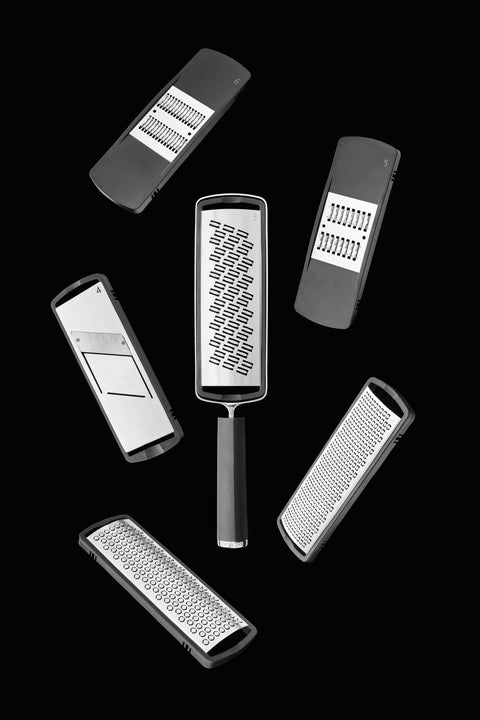
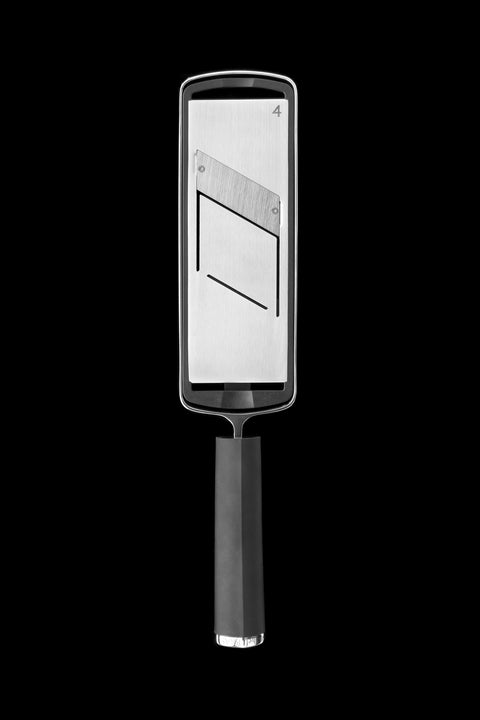
Chef Kazuya Iguchi of Restaurant Toumin shares how the grater preserves ingredient fibers without releasing excess liquid—such as drawing out little ginger juice—and recalls slicing vegetables every morning for gargouillous at Michel Bras, sometimes for 100 to 120 portions, where balanced thickness let ingredients cook quickly. He also highlights using the mill with dried ingredients like dried tomatoes, Timur pepper from Nepal (with its pepper-and-lemon aroma), and even fish bone crackers, noting that its spacious chamber, nine coarseness levels, and freshly ground results—here set slightly finer for a blend of tomato and Timur pepper—alongside high-quality blades and shapes expand textures, flavors, and creative possibilities in his dishes.
Chefs & Le Moulin
Chefs highlight how Le Moulin's adjustable grind settings—from fine to coarse—let them emphasize different aspects of taste, texture, aroma, and visual presentation rather than settling for a single uniform grind. Examples include grinding vegetable chips finely for flavor or coarsely for appearance, aroma, and texture; using larger chunks of four dried mushrooms on a rougher setting while appreciating easy cleaning and drying so lingering odors don't carry over; grinding ingredients finely and evenly where standard mills fall short; roasting and dehydrating Botan Ebi shrimp heads and fresh kombu for different sides of a squash dish using the finest grind; and admiring its refined table-ready design, precision, and thoughtful multi-year development that expands fragrance and creative possibilities.
Kazunari Nakamura, La Bonne Table:
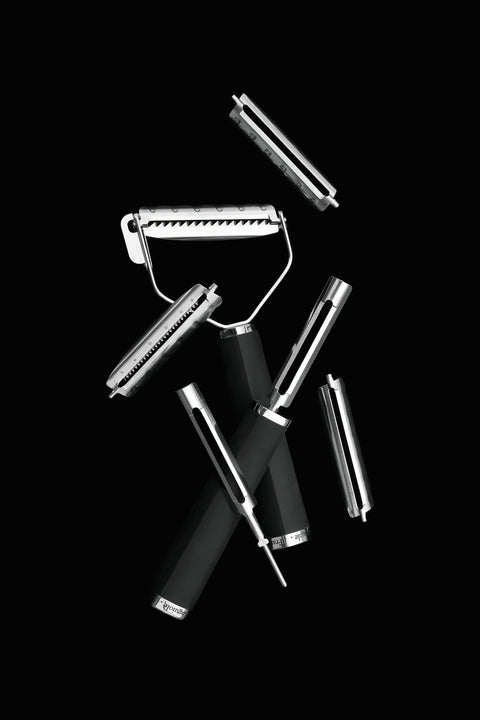
Chef Kazunari Nakamura of La Bonne Table demonstrates these culinary tools as a learning opportunity for his team, explaining how a single cut on delicate—especially raw—vegetables changes appearance, taste, texture, and mouthfeel much like how cutting affects sashimi in Japanese cuisine, while stimulating creativity and raising restaurant quality. He notes that the knife excels on vegetables without crushing fibers and handles larger produce easily, that the peeler avoids the deep or awkward cuts of typical peelers to peel delicately and keep round shapes, and that the sharp, pocket-sized petite mandoline avoids the bulk and upkeep of full-sized mandolines while opening new ideas and possibilities.